
Morning All,
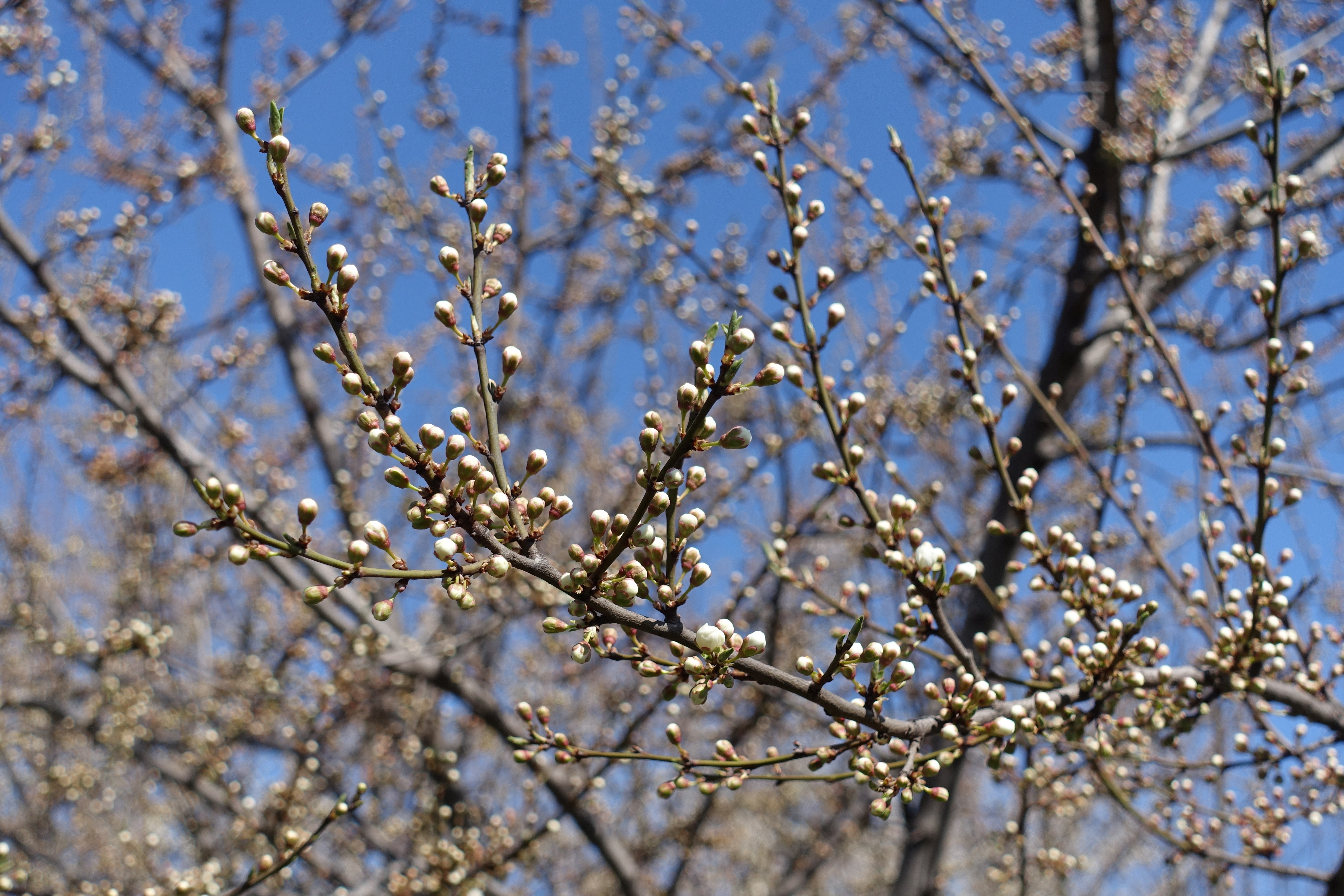
At last, a cold front has come across the main fruit-growing districts, but we are still tracking a long way behind previous years. In seasons like this, it is important to consider the farm management factors that can influence bud break.
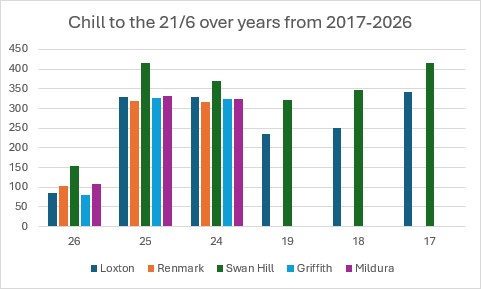
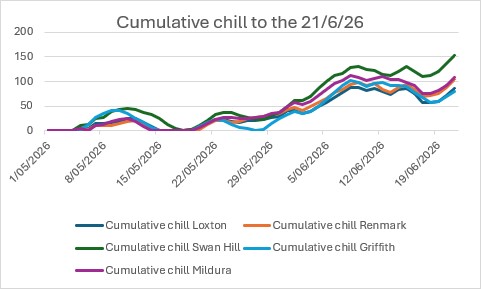
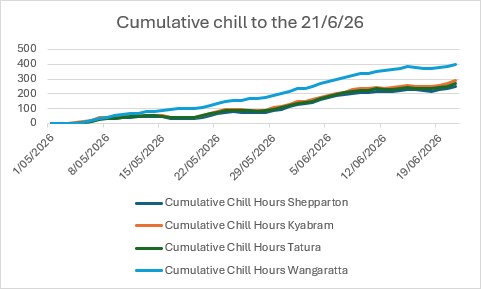
Chill conditions to 21 June are the lowest I have recorded using the RCU method since I began collating chill data in 2020. The following points are worth considering and discussing with your agronomist, as this year is an anomaly in terms of chill accumulation.
- Time of pruning: Low-chill varieties can be stimulated to break bud once they are pruned. For this reason, it is recommended that these varieties are pruned after higher-chill varieties, which are less likely to be stimulated by pruning if adequate chill conditions have not yet been met.
- Lighter pruning on high-chill varieties: The coolest part of the tree is generally the south-west corner, so crop loads are likely to be heavier in these areas and lighter in the north-east and northern sections. If you are undertaking a limb removal program, consider removing limbs from the warmer side of the tree.
- Oil sprays can act as a bud irritant and help stimulate bud movement. However, oil can also hold heat, which may reduce overall chill unit accumulation. This season, oil sprays should be applied as late as possible across all varieties, particularly medium to high-chill lines.
- Dormancy-breaking agents (Dormex etc) are likely to be applied later than normal this year due to the delayed start to chill accumulation.
It is worth comparing current RCU levels with recent seasons, as this highlights how far below previous years we are currently tracking. Data from 2020 to 2023 is in line with the 2024 and 2025 seasons, while the previous two low-chill years were2008 and 2016. At this stage, 2026 is tracking below both of those years for the same timeframe.
Major disruptions in chill accumulation often occur between 18-23 July if a warm spell develops during this period. If weather conditions suggest negative chill, it may be worth considering the application of chill polymers ahead of warm weather to help hold bud movement and reduce the risk of a false spring break. Growers with misting sprinklers may also be able to use these systems to help mitigate the impact of negative chill on bud viability.
One positive from the above-average rainfall has been the excellent growth of the mid-row sward. Keeping this growth active for as long as possible can help keep the orchard floor cooler and reduce radiated heat from the ground overnight. This must be balanced with frost management strategies later in the season.
On a positive note, the weather forecast for the next seven days suggests the following RCU gains:
- Riverland: +70–90 RCU
- Sunraysia: +70–80 RCU
- Griffith: +60–80 RCU
- Goulburn Valley: +100 RCU
Regards,
Shane Phillips | Head Chemist - Research & Development
E: shane.phillips@biocentral-labs.com
Stay connected and receive updates, resources and insights—subscribe to our newsletter today.


